What we believe
In this section, you can read about the faith and teachings of the Evangelical Lutheran Church of Finland.

What is faith like in Finland?
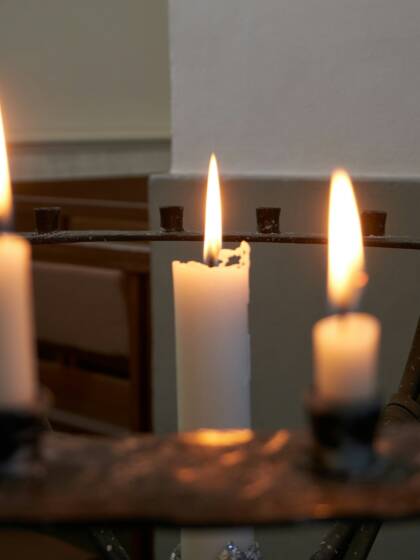
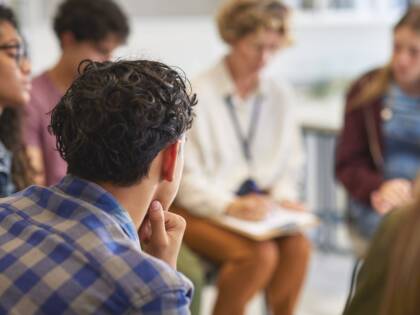
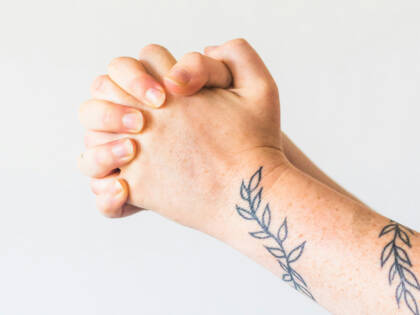
In Finland, faith is often personal and quiet. People may pray alone or sit quietly in church. Many Finns feel close to God in nature – by a lake, in a forest, or at the seaside.
Music is important in Finnish church life. People often sing hymns during services.
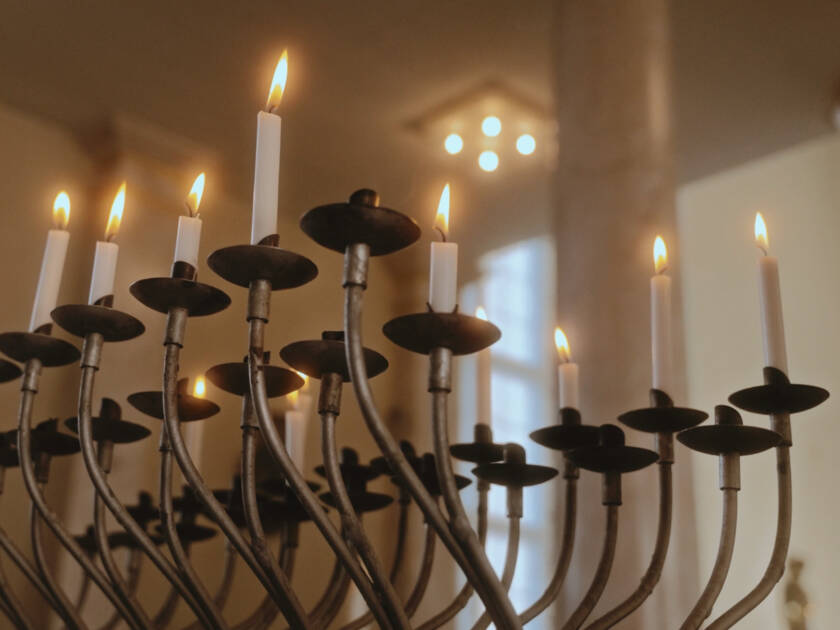
Worship services
You are always welcome at church services – whether you are a member of the Church or not.
Worship is a time to meet God, say thank you, and receive His love and forgiveness. It is the most important part of church life in Finland.
Most church services happen on Sundays at 10 a.m. or 12 noon, but there are also special services on other days.
Some examples:
-
- Services for children and young people
-
- Taizé and Thomas Mass, which are popular with young adults
-
- Special services like Metal Mass or Pop Mass, with modern music
-
- Christmas, Easter, and All Saints’ Day services are especially important for many
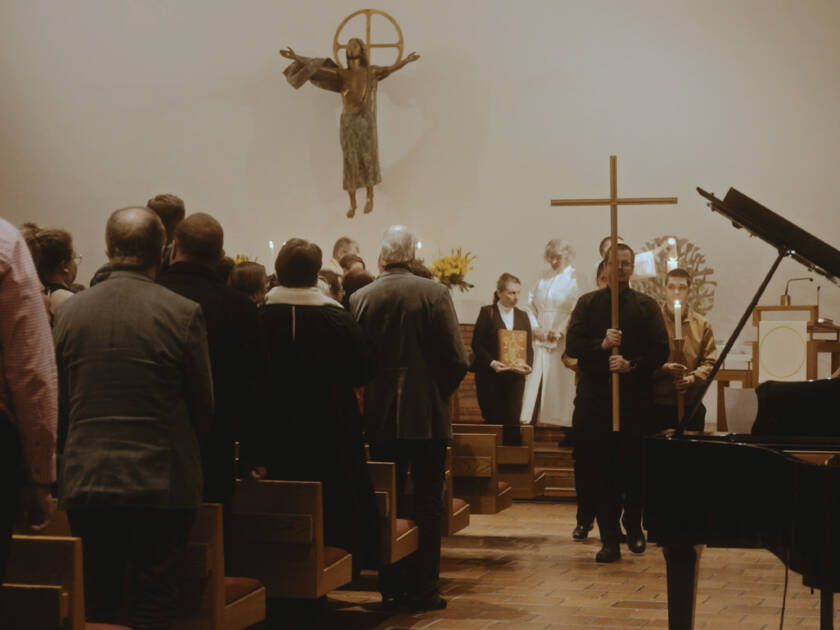
Churches also offer family services or services for people of certain ages or areas – but everyone is always welcome.
Church services are held:
-
- Every Sunday in all parishes
-
- On Christian holidays (like Christmas and Easter)
-
- Often on weekdays too
Some services are also shown on TV and radio, especially during holidays.
After worship, we go back to our daily lives with strength to help others and live according to God’s love.
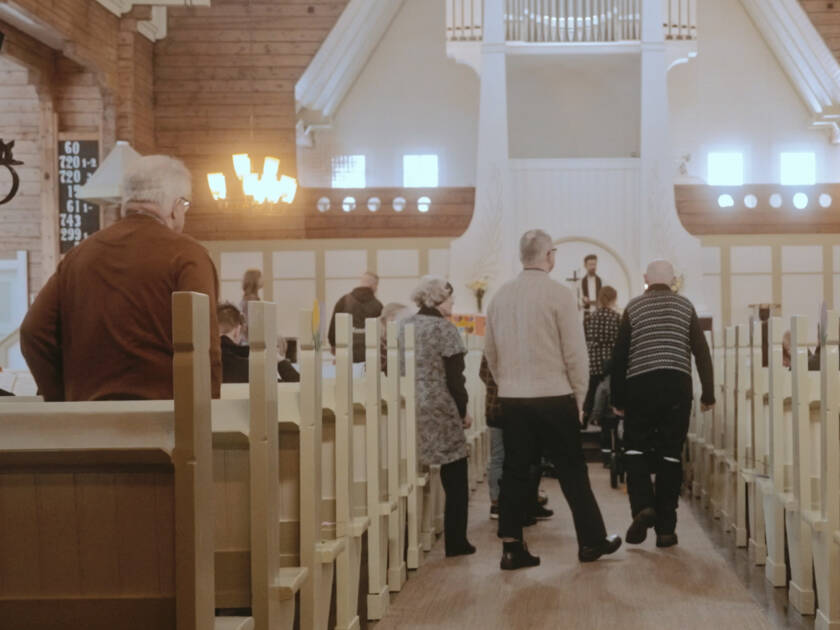
What Happens in a Sunday Service?
Church bells ring, and the service begins.
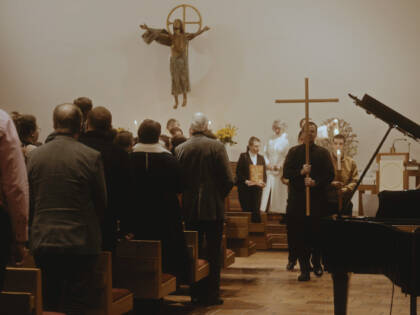
The pastor may walk into the church carrying a cross.
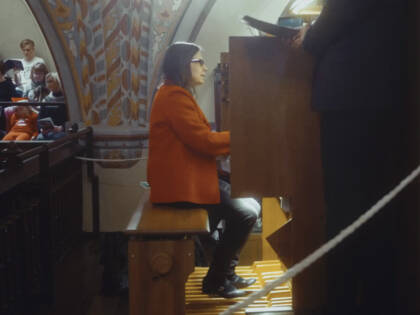
Everyone sings the opening hymn (song).
The pastor greets everyone and starts with the words: “In the name of the Father, the Son and the Holy Spirit.”
The pastor speaks about the theme of the day.

Everyone says a confession together (saying sorry to God), and the pastor announces forgiveness.
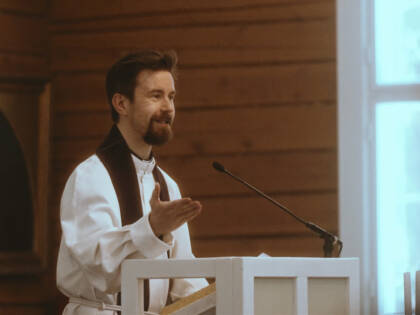
Three Bible readings are read
One from the Old Testament, one from the New Testament and one from the Gospels (read by the pastor, followed by a sermon)
The congregation says the Creed – a summary of Christian belief.
Prayers are said for
The Church and the world, people who were recently baptised, married, or who passed away
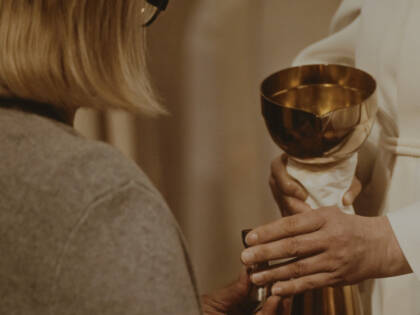
Holy Communion (Eucharist). This is the most important part of the service for many.
The bread and wine are blessed and shared. People sing songs like Sanctus and Agnus Dei. The pastor offers peace to everyone.
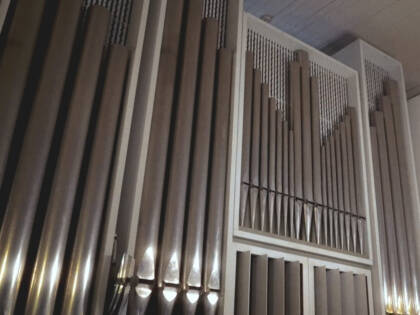
After Communion, there are thanksgiving prayers and hymns.
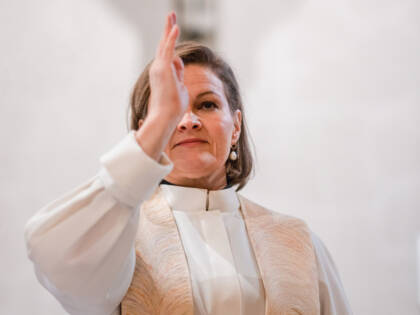
The service ends with a blessing and a closing hymn. The pastor may say: “Go in peace and serve the Lord with joy.”

Often, people stay for coffee or conversation afterwards.
The Church Year
The Church follows a special calendar. Each Sunday and holiday has its own theme, Bible readings, and prayers.
The Church year begins in Advent (4 weeks before Christmas) and ends in late November with Christ the King Sunday.
There are three main parts:
- Christmas – Prepared during Advent, ending in January
- Easter – Prepared during Lent, followed by Easter and then Pentecost
- Pentecost Season – From Ascension Day to Christ the King Sunday
This calendar helps us reflect on different parts of the Christian story throughout the year.
Baptism and Holy Communion (Eucharist)
Lutherans celebrate two important sacraments:
- Baptism: When we are welcomed into the Christian faith
- Holy Communion (Eucharist): A sacred meal with bread and wine, reminding us of Jesus’ love and sacrifice
Who can receive Holy Communion?
- All baptised and confirmed Lutherans
- Baptised children with a parent or godparent
- Members of the Anglican Churches of the Porvoo Communion and Church of Scotland
- In special cases, other baptised Christians may also receive Communion
What if I don’t want to take Communion? Go to the altar and place your right hand on your left shoulder – you will receive a blessing instead.
Gluten-free bread or non-alcoholic wine is often available – just ask before the service.
In Finland, most churches celebrate the Eucharist every Sunday.
Baptism
In baptism:
- God welcomes us by name
- We receive grace, faith and blessing
- Baptism is for children and adults
- It is the beginning of a Christian life and is valid forever
What do we believe?
We believe in God as the Creator, Redeemer and Sanctifier. God is one and yet three persons:
- God the Father: Created the world and cares for us like a parent.
- God the Son (Jesus): Came to live among people and showed God’s love.
- God the Holy Spirit: Strengthens and guides us every day.
Creeds
The Church holds to the three ecumenical creeds.
Like most Christian churches, the Evangelical Lutheran Church of Finland holds to the three ecumenical creeds.
The Apostles’ Creed
I believe in God,
the Father almighty,
creator of heaven and earth.
I believe in Jesus Christ,
God’s only Son, our Lord,
who was conceived by the Holy Spirit,
born of the Virgin Mary,
suffered under Pontius Pilate,
was crucified, died, and was buried;
he descended to the dead.
On the third day he rose again;
he ascended into heaven,
he is seated at the right hand of the Father,
and he will come to judge the living and the dead.
I believe in the Holy Spirit,
the holy catholic Church,
the communion of saints,
the forgiveness of sins,
the resurrection of the body,
and the life everlasting.
Prayer
Prayer is how we speak with God. It can be quiet, personal, or shared with others.
Jesus taught us the Lord’s Prayer (“Our Father”), which is said in every service.
You can pray anywhere, with or without words. God hears you.
“Do not worry… let your requests be made known to God.” (Philippians 4:6)
The Bible
The Bible is the holy book of Christians. It teaches us to:
- Love God and love our neighbour
- Follow Jesus and trust in God
- Understand Baptism and Communion, which Jesus gave us
We read the Bible in worship and in daily life. It shows both God’s will and people’s experiences.